
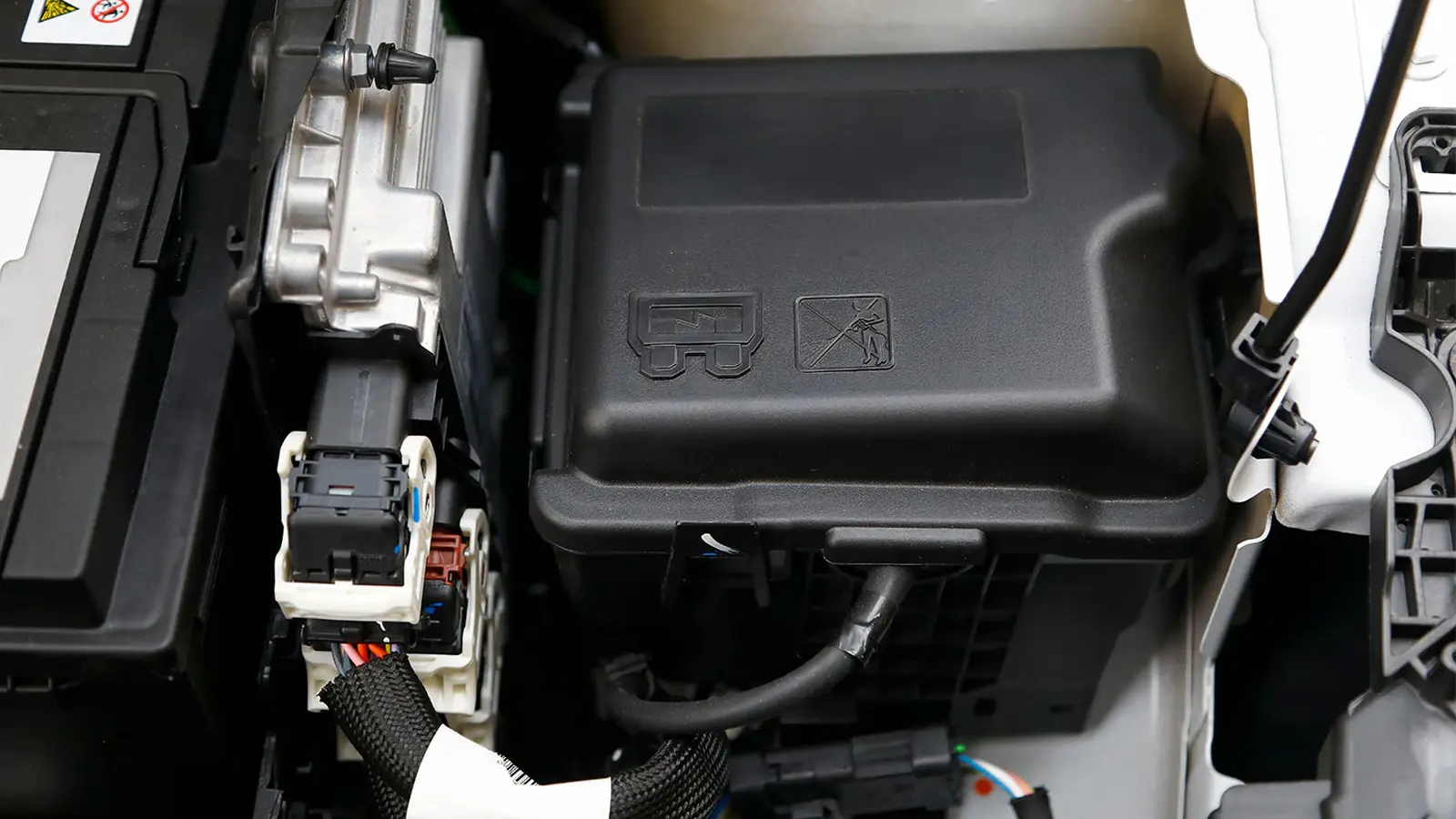

There’s a tiny computer under your hood that never sleeps. It listens, decides, and nudges dozens of components every second to keep the engine behaving. Short of a heartbeat, nothing in a modern car acts faster or more invisibly than the Electronic Control Unit — the ECU.
What an ECU is and how it keeps the engine honest
Call it a control module, the engine computer, or simply the ECU. At its core it’s a specialised microcontroller bundled with firmware and memory. Sensors scattered through the engine — measuring intake air, coolant temperature, throttle position, crank and cam position, and exhaust oxygen levels — feed a continuous stream of data. The ECU digests that stream and issues commands to actuators: injectors, ignition coils, idle control valves, and emission-control devices. The goal is straightforward: extract useful power while minimizing fuel use and emissions.
It sounds simple. It isn’t. The device performs thousands to millions of calculations per second, balancing competing objectives (performance, efficiency, longevity, emissions compliance) while adapting to changing conditions. Cold start. Heavy load. Thin air at altitude. The ECU shifts maps and strategy on the fly.
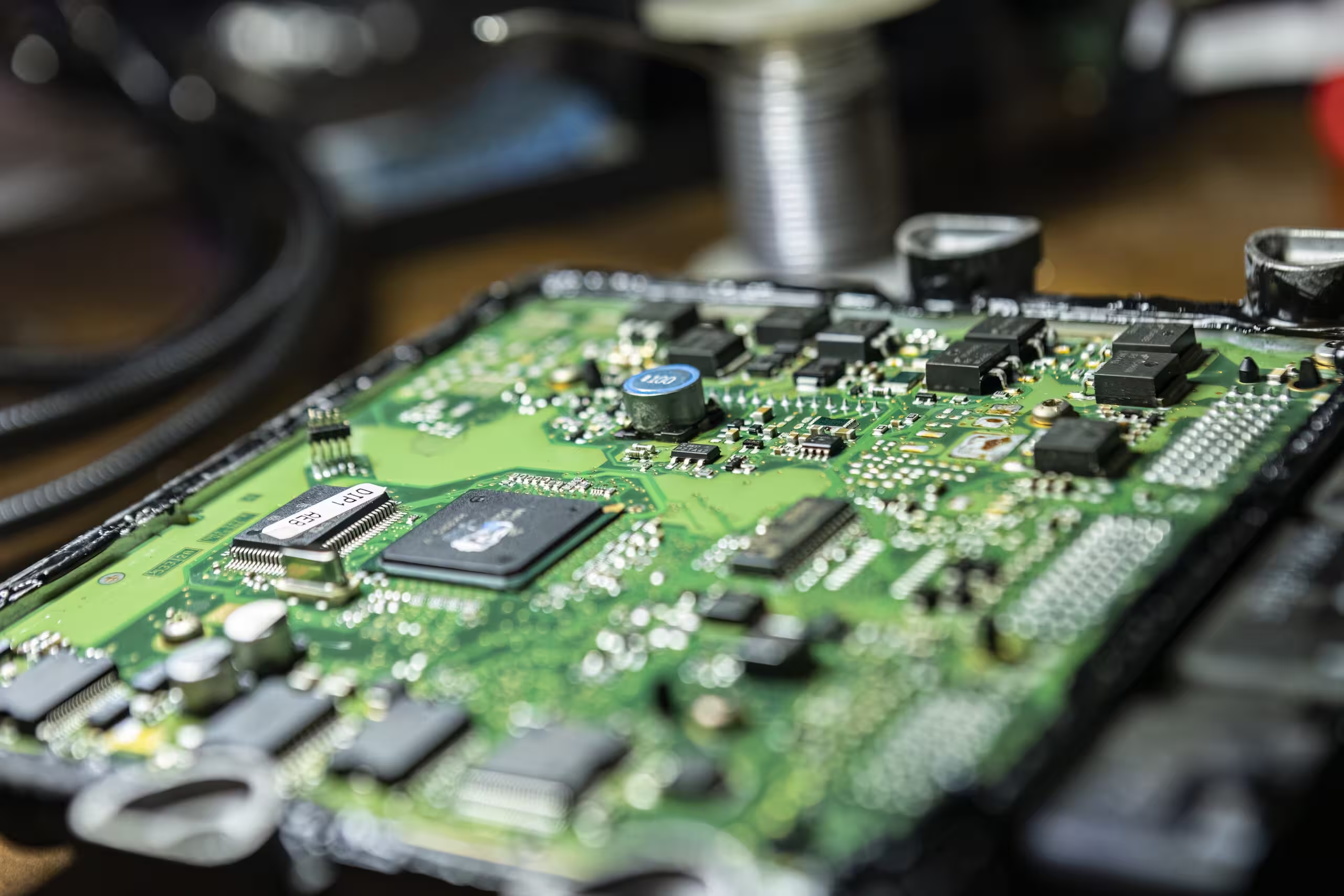
Under the hood, the ECU’s hardware typically includes a low-power CPU, volatile RAM for computations, non-volatile flash memory for the operating program, and inputs/outputs for analog and digital signals. It communicates with other modules over vehicle networks such as CAN bus or LIN. Firmware encodes control strategies: ignition timing curves, fueling maps, and safety limits. Together, software and sensors constitute the engine management system.
Where it lives, and why location matters
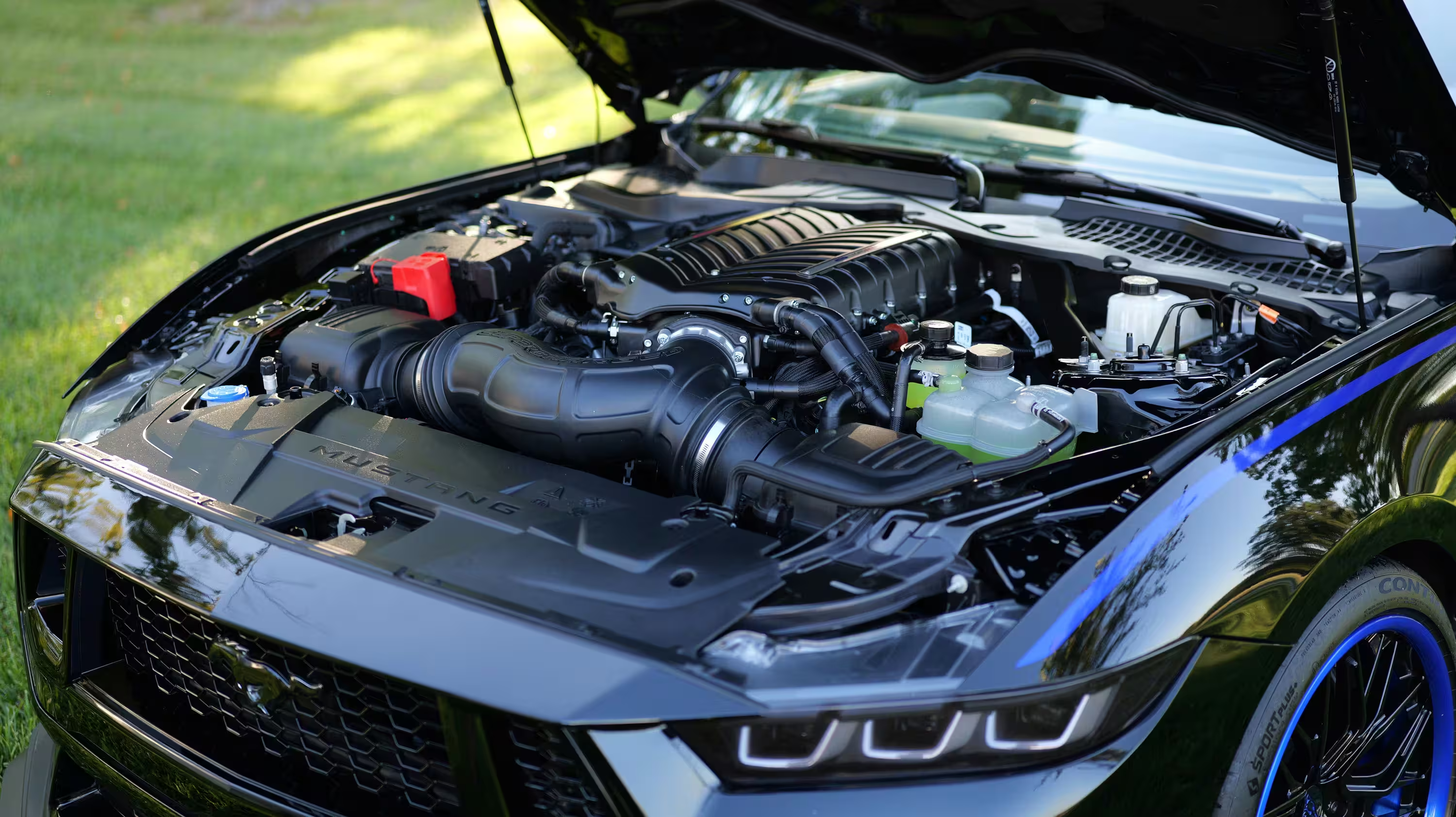
Manufacturers don’t agree on a single hiding place for ECUs. Expect to find them near the engine, inside the engine bay, or tucked behind the dash or glovebox. Proximity matters because many sensor lines and actuators need short, robust wiring runs. The owner’s manual will usually point you to the exact location.
Placement also affects longevity. Moisture, heat, and vibration are enemies of electronics. An ECU exposed to water ingress or constant high temperatures can fail prematurely. That’s why some high-end vehicles seal ECUs in resin or mount them in climate-controlled compartments.
Common failure modes and symptoms
What misbehaviour looks like

When an ECU or its connected sensors misbehave, the signals are often unmistakable: the check engine lamp flickers, the car stalls, idle becomes rough, acceleration lags, or fuel consumption climbs. Sometimes the car refuses to start. At other times the system locks the vehicle into a reduced-capability state known as limp mode — a protective strategy that limits power until the fault is fixed.
Behind those symptoms lie a range of problems. A failed sensor can feed bad data. Wiring chafes can interrupt signals. Water can corrode circuit boards. Software glitches or corrupted flash memory can alter control maps. Electromagnetic interference and illegal aftermarket modifications may also produce strange behaviour.
Diagnostics, repair, and replacement
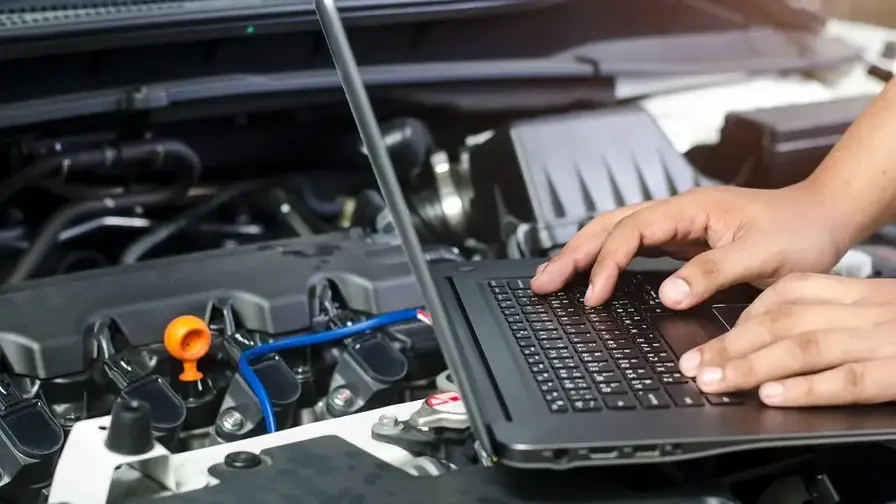
How do you know whether the ECU is truly failing or a sensor is to blame? Modern workshops begin with an OBD-II scan to read fault codes and freeze-frame data. That’s usually followed by targeted checks: oscilloscope traces on sensor signals, voltage and ground integrity tests, and wiring inspections. Experienced technicians isolate whether the fault originates upstream (sensors, wiring), within the ECU, or downstream (actuators).
Repair is often preferable. Many faults arise from damaged connectors, a bad grounding point, or a failed sensor — quick fixes that avoid ECU replacement. When an ECU itself is defective, options include repair at specialist electronics shops or replacement with a new or remanufactured unit. Keep in mind that replacement can require software matching and security programming; immobiliser and VIN pairing are common steps on modern cars. That’s why dealerships or authorised garages are often recommended for complex ECU swaps.
Testing an ECU on a bench requires expertise, specialized tools, and the right harnesses. DIY attempts without these resources risk introducing new faults or damaging the unit.
Tuning, remapping, and legal trade-offs
ECU remapping — uploading altered firmware or calibration tables — is an established aftermarket route to extract more power or improve fuel economy. Remaps change ignition timing, fueling, boost control on turbo cars, and other parameters. Gains can be substantial. So can risks.
Remapping can push components beyond their design limits, shorten engine life, and often void manufacturer warranties. It can also increase emissions, potentially running afoul of regulatory tests. Professional tuners balance ambition with reliability, but owners should be aware: this is a trade-off between performance and compliance.

Scientific and technical background
The ECU’s rise mirrors broader trends in embedded computing. Microcontrollers became cheaper and more capable, sensors grew more accurate, and vehicle networks allowed distributed control. The result: a tightly coupled cyber-physical system where software governs mechanical behavior. For scientists and engineers, these systems are fascinating testbeds for control theory, real-time systems, and fault-tolerant design.
Recent developments — over-the-air updates, domain controllers consolidating multiple functions, and the advent of software-defined vehicles — signal another shift. ECUs once dedicated to one subsystem may give way to centralized high-performance compute units running virtualised control functions. That transition creates opportunities for deeper diagnostics and feature updates, but it brings new cybersecurity and safety challenges.
Expert Insight
'Think of the ECU as a conductor in an orchestra,' says Dr. Maria Gonzalez, an automotive systems engineer with two decades in engine control development. 'Every instrument — sensor, injector, turbo actuator — plays its part. The conductor’s job is to keep the timing exact, even when a violin goes out of tune. That requires robust sensing, reliable networks, and software that anticipates real-world variability.' She adds: 'As vehicles become more software-centric, ensuring secure, verifiable updates will be just as important as making the engine run efficiently.'

The future will amplify that role. Machine learning and adaptive control strategies are already appearing in prototypes, allowing ECUs to fine-tune behavior to individual engines and driving styles. Regulators and manufacturers must then reconcile personalized performance with fleetwide emissions targets and safety standards.
Key takeaway: the ECU is not just a part; it is the decision-making center that shapes efficiency, power, and emissions in every modern car.
Next time you feel the engine respond smoothly under load or survive a rough idle without drama, remember: a small computer is working hard, second by second, making judgement calls you never see.

Diskuze
Napsat komentář
Komentáře
Zatím žádné komentáře. Buďte první.