
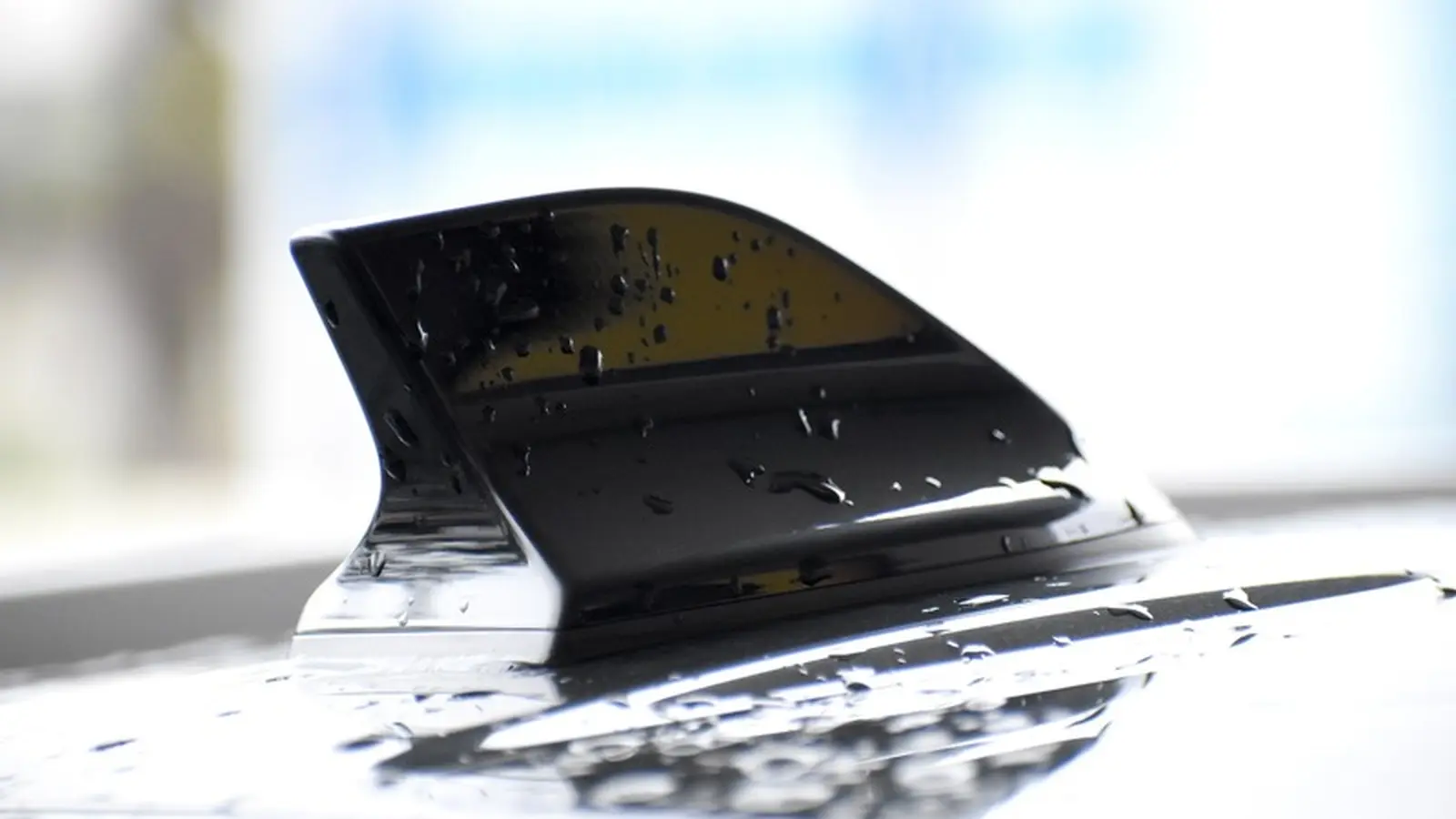

Signal drops right as your favourite chorus starts. Frustrating? Absolutely. Yet that little metal rod or black fin on your roof is a compact radio laboratory, translating invisible waves into sound. When reception falters, the problem is rarely mystical. It’s usually physics, wear, or a mismatch between design and environment.
How car aerials capture radio waves
An antenna is nothing more than an interface between free-space electromagnetic waves and an electrical circuit. Radio and digital broadcasts travel across the electromagnetic spectrum as alternating electric and magnetic fields. The antenna intercepts a portion of that field and converts it into a tiny alternating current. Your car’s radio then selects, amplifies and decodes the signal into music or data.
Wavelength matters. AM broadcasts can occupy kilohertz frequencies with wavelengths measured in hundreds of metres; FM sits in the VHF band around 88–108 MHz with wavelengths on the order of three metres; DAB and mobile services use higher frequencies and shorter wavelengths. Antenna dimensions and geometry determine which wavelengths are picked up efficiently. A common rule of thumb in antenna design is the quarter-wave principle: an antenna tuned to about one-quarter of the radio wavelength tends to perform well at that frequency. Shorten or hide that element and sensitivity drops.
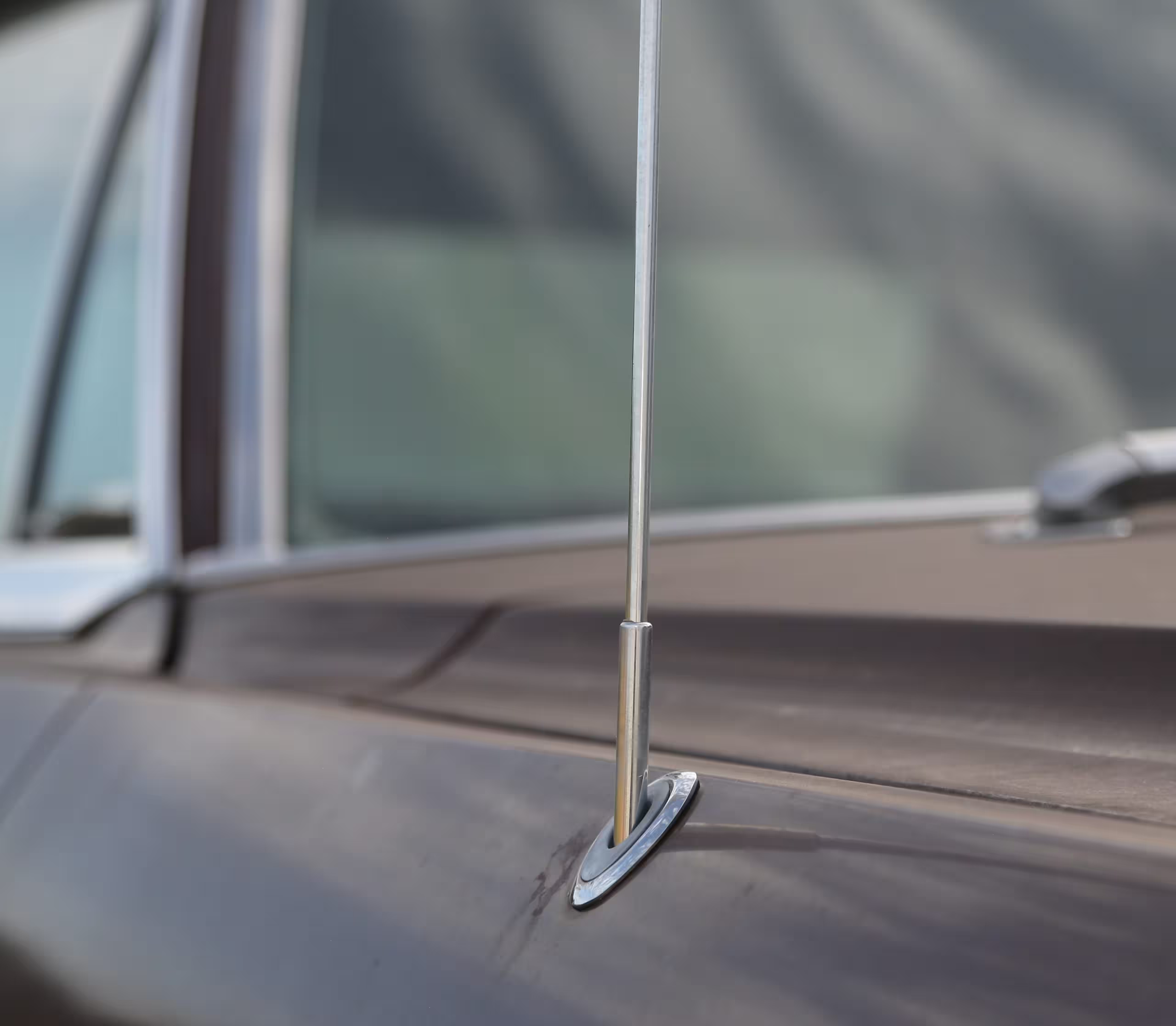
Design choices also introduce trade-offs. A long external mast offers good reception for long wavelengths and can be inexpensive to repair. A printed window aerial is neat and protected from the elements, but it can suffer if the conductive traces are broken or covered by aftermarket tint films. Modern shark fin modules try to do everything at once—AM/FM, DAB, GPS, cellular—by integrating multiple radiating elements and active electronics into a small aerodynamic package. Convenience comes at complexity.
Types, failure modes and practical fixes
Mast antennas
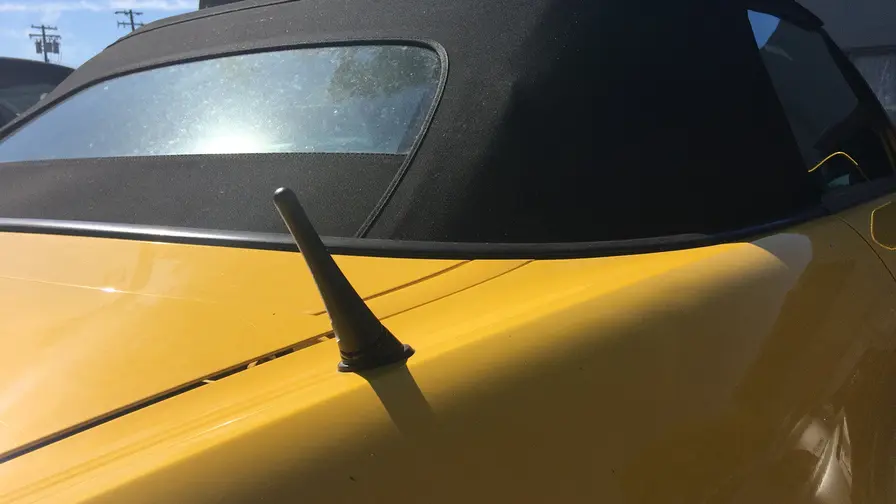
Think of the classic stick. Simple. Effective. Masts can be fixed, telescopic, or powered to extend and retract with your ignition. They pick up signal reliably across a wide area and are easy to replace. But they are exposed. Car washes, low branches, and vandalism bend or snap them. Corrosion is another common culprit. Rust increases electrical resistance and degrades the signal path. If a powered mast fails to extend, the small motor or gear train may be jammed with grit or ice. Cleaning helps; replacement or refurbishment is often the realistic solution.
Internal (window) antennas
These are arrays of fine conductive traces laminated into a rear or side window. They keep the vehicle uncluttered and protected from the weather. The downside? They can be interrupted by window tinting, adhesive residue, or accidental cuts. Proximity to other electronics can also create interference; the antenna needs a decent ground plane and proper routing to avoid coupling with infotainment wiring or heated defroster circuits. Repair options include conductive paste for small breaks or a full replacement of the glass assembly for severe damage.
Shark fin modules
Modern cars often wear the shark fin as a styling statement that conceals considerable hardware: several antenna elements, active amplifiers, and sometimes even GPS or cellular modules. These units are more resilient to accidental knocks and can be painted to match the body. Yet they are compact, and compactness limits element length, so low-frequency AM reception may be weaker than on a long mast. Diagnostics can be harder because multiple systems share the same housing; a failure might affect radio and navigation simultaneously.
Other common problems are electrical rather than mechanical. Corroded connectors and degraded coaxial feedlines introduce attenuation. A loose ground or a poor mating between antenna and receiver produces unpredictable nulls and static. Matching impedance matters: when the antenna-feedline-receiver system isn’t matched, signal power is reflected instead of delivered. That’s why many aftermarket solutions recommend parts that are designed for your vehicle’s make and radio.
Simple maintenance extends life. Avoid forcing a retractable mast. Rinse away road salt and use a soft cloth to remove grime. Inspect connectors under the trim for corrosion. If reception degrades in a pattern—good close to transmitters, poor further away—that’s often a sign of feedline loss or a failing amplifier rather than an isolated tuner fault.
Scientific context and related technology
Antennas are foundational in radio science and spacecraft communication alike. The same Maxwellian principles that govern a car aerial also underpin ground stations that talk to satellites. Automotive systems increasingly borrow from telecom: active antennas with integrated low-noise amplifiers, diversity reception (using multiple elements to reduce fading), and space-efficient arrays. Digital broadcasting standards such as DAB rely on modulation schemes and error correction to tolerate some signal degradation, but no amount of digital error correction can conjure energy that wasn’t received in the first place.
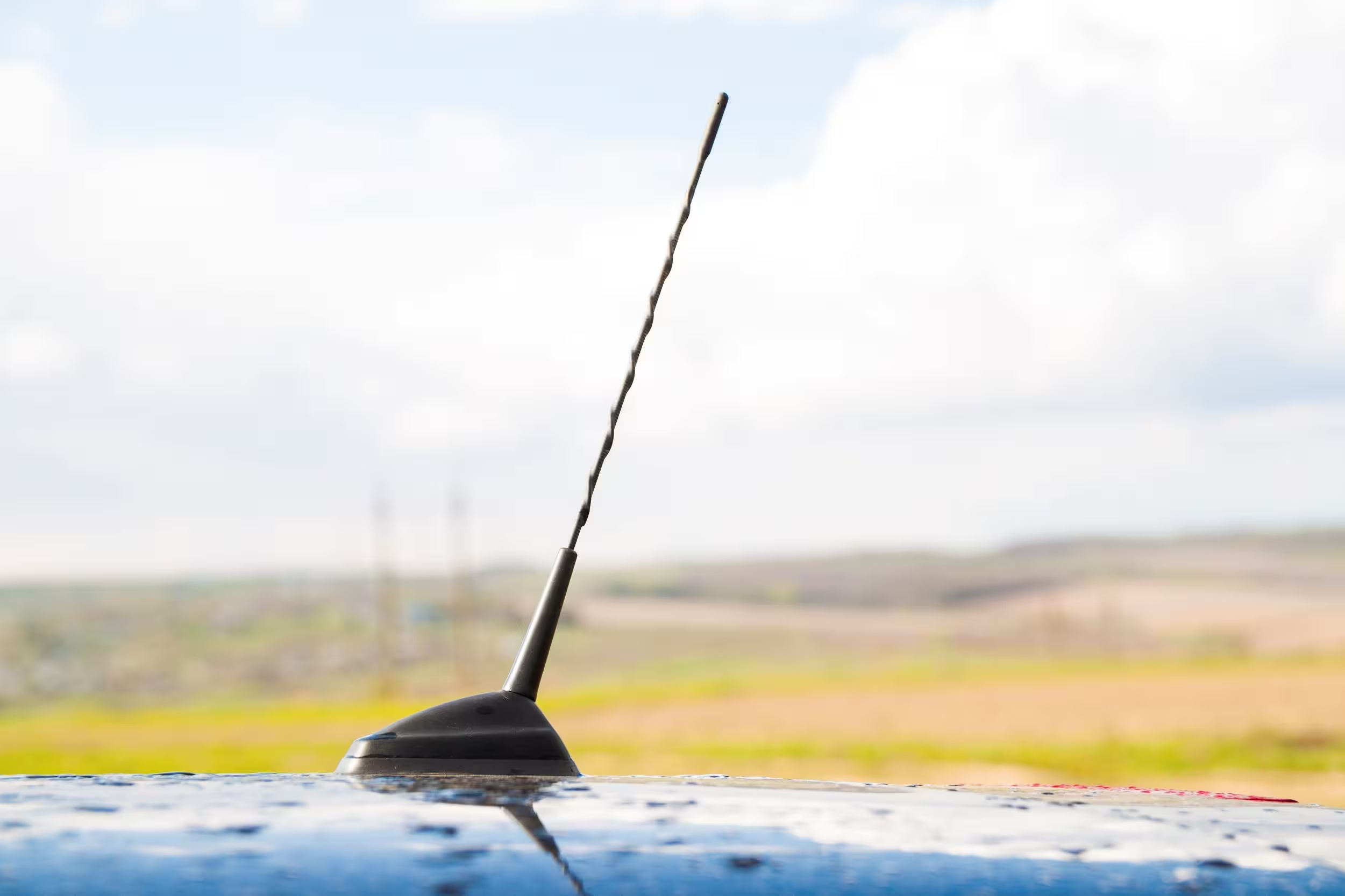
Emerging connectivity trends—vehicle-to-everything (V2X) communications, 5G integration, and connected navigation—push antennas to carry more services simultaneously. That increases demands on shielding, filtering and electromagnetic compatibility. Engineers use simulation tools and anechoic chamber testing to design multi-function modules that balance gain, directivity and isolation between services.
Expert Insight
"When a radio goes quiet, start by checking the obvious—physical damage and connectors—before chasing complex software faults," says Dr. Sarah Lin, an RF engineer with two decades designing vehicular antenna systems. "In many vehicles the antenna module is now active: a failed amplifier will look identical to a busted mast on the surface. Proper diagnosis with a simple continuity test and a visual inspection removes guesswork. If you want reliable long-range FM, a longer external element or an antenna with an integrated mast still outperforms compact designs for that specific task."
Key takeaway: inspect, clean and match—then test the antenna before replacing expensive head units.
Want to upgrade? Choose components rated for the frequencies and services you use. If you regularly travel through rural valleys, prioritize low-frequency reception and consider an external or hybrid solution. If aesthetics and multi-service functionality matter more, a high-quality shark fin with an integrated active module can be the better investment.

Small piece of metal. Big role. Keep it healthy and your soundtrack won’t drop out when the road gets interesting.
Diskuze
Napsat komentář
Komentáře
Zatím žádné komentáře. Buďte první.