
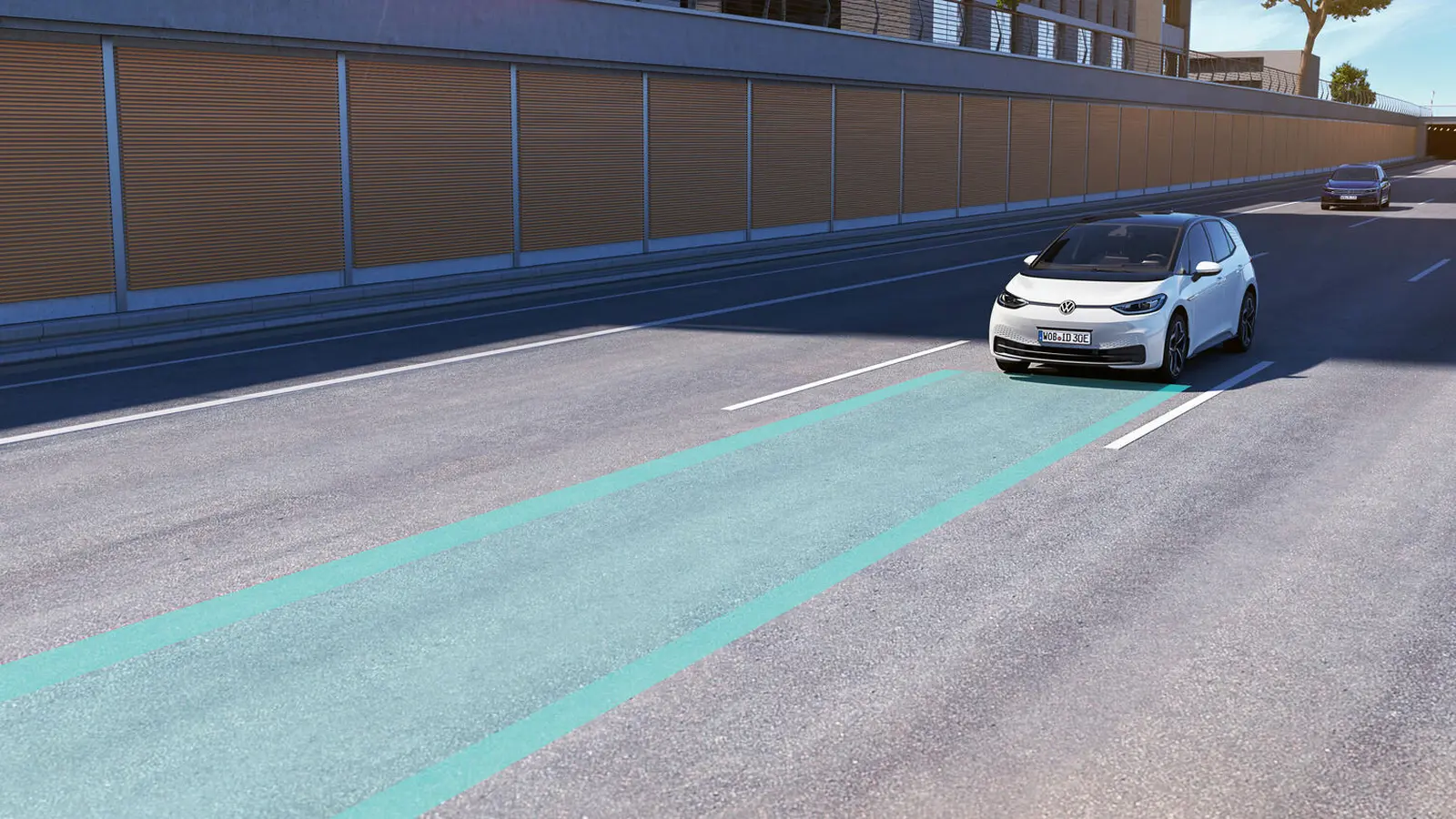

You think a car that tugs gently at the wheel is “self-driving.” Not quite. Lane Keep Assist (LKA) has become a headline feature, baked into trim packages and marketing copy. It steers you back when the car drifts. It beeps if you cross a line. For many drivers, that feels like a step toward autonomy. But the reality is more complicated—and that matters for safety, regulation and what buyers should expect when they test-drive a vehicle.
What Lane Keep Assist actually does
At its core, LKA is a driver-assistance tool, not an autopilot. Cameras mounted behind the windshield read painted lane markings. When the system detects unindicated drift toward an adjacent lane, it will apply steering corrections and sometimes light braking on the opposite side to nudge the car back. Those steering nudges are deliberate, short, and designed to restore lane position rather than replace the driver’s inputs.
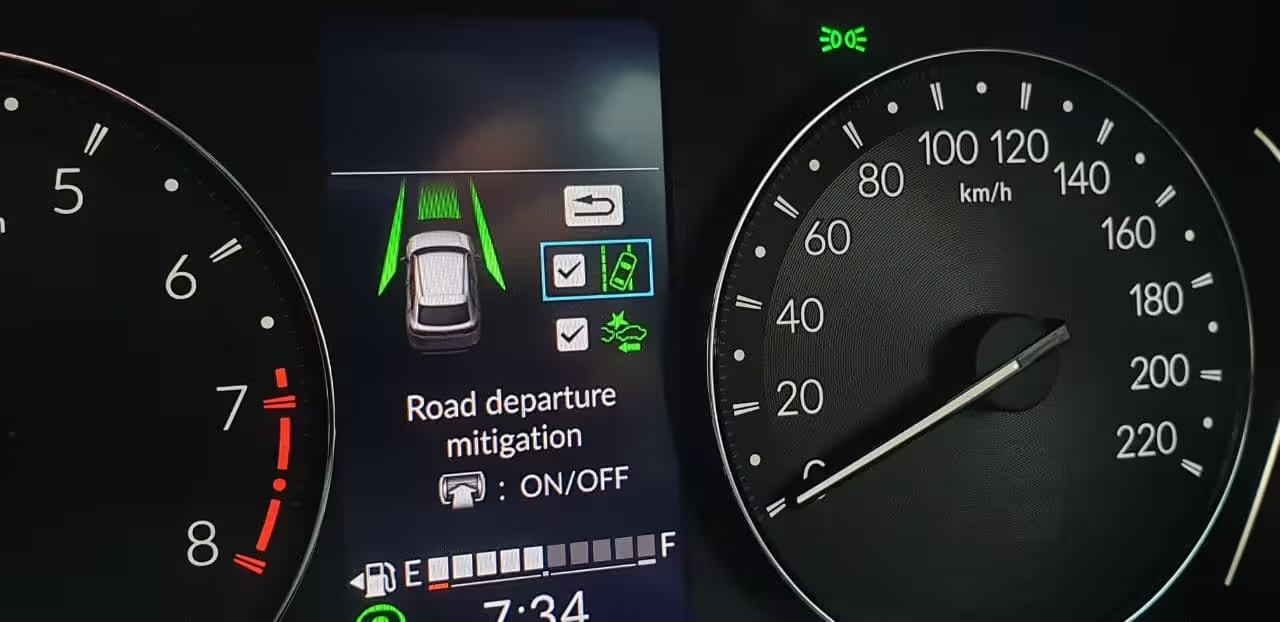
Lane departure warning (LDW) is usually the baseline. It alerts the driver with sound, a dashboard icon, or haptic feedback through the steering wheel or seat. LKA builds on LDW by taking action: a tangible correction instead of an alert alone. Put together, the technology is best described as lane-departure warning with steering and/or braking intervention—more precise language than the blanket acronym LKA.
Sensors matter. Most LKA implementations are camera-first systems. Some manufacturers combine camera data with radar and other sensors to create a richer, more reliable view of the road. The difference between a camera-only system and a sensor-fusion package shows up in real-world reliability: rain, glare, faded paint and construction zones degrade camera-only performance much faster than systems that also use radar or map-based cues.
What LKA is not—lane centering and higher automation
Confusion arises because automakers use different names for similar functions. But there is a technical distinction worth keeping in mind. Lane centering systems are designed to keep a vehicle near the geometric center of a lane proactively. They apply continuous steering adjustments across a range of speeds, sometimes from a stop up to highway pace. Lane centering is therefore closer to true lateral control than a corrective LKA system that only intervenes when you cross a line.
Some manufacturers blur the line. Early implementations from certain brands could perform centering at limited speeds—typically above 40 mph—yet the marketing copy still called it LKA. Others, such as Honda’s Lane Keeping Assist System in certain trims, function as genuine lane-centering features at higher speeds. That inconsistency is why safety reviewers prefer to describe what a system does rather than rely on the label affixed to it.

Combine lane-centering with adaptive cruise control (ACC) and you get lateral and longitudinal assistance—steering, braking and acceleration. That combination generally qualifies as Level 2 automation under SAE International’s scale, where the system handles both steering and speed control but the driver must remain engaged and ready to intervene.
Why naming and branding matter
Names shape expectations. When a feature labeled LKA behaves differently from one model to another, drivers can misunderstand capabilities. A 2018 AAA survey found dozens of brand names attached to similar technologies; Mercedes, for example, used multiple different names for variations of adaptive cruise control alone. Consumers shopping for safety features can be confused by bundles and model-year changes that alter functionality without an obvious label change.
Manufacturers often group features into technology suites—Honda Sensing, AcuraWatch, Subaru EyeSight—yet the contents of those suites vary by model year and trim. A 2021 model might include lane centering where a 2020 did not, even though both carry the same suite name. That variability undermines a shopper’s ability to compare features reliably between vehicles.
Agencies and advocacy groups have pushed for standardization. In 2019, a coalition including AAA, Consumer Reports, J.D. Power and the National Safety Council called on automakers to unify naming and definitions for advanced driver-assistance systems so buyers could know precisely what they were getting. The goal is simple: clarity reduces misuse and improves safety outcomes.
How LKA performs in the real world
Surveys show owners generally like these systems. Consumer Reports reported roughly 73–74% of owners being “very satisfied” with LDW and LKA, and about a third of those surveyed credited the systems with helping them avoid crashes. Yet user satisfaction masks important variability. Sensitivity settings, false alerts and abrupt corrective actions can make an otherwise helpful feature feel intrusive.
Some systems are shy; they shut off at the first sign of a broken lane line. Others are eager and will tug repeatedly, resulting in a jittery ride that encourages drivers to turn the feature off. Neither extreme is desirable. The ideal implementation is one that intervenes predictably, tolerates brief lane marking interruptions, and gives clear, intelligible feedback to the driver.
Environmental factors matter: poor lane paint, heavy snow, low sun angles, and complex construction zones all challenge vision-based systems. Sensor fusion helps, and so do higher-resolution maps and driver-monitoring cameras that ensure the driver stays engaged. Even the most advanced systems—GM’s Super Cruise, for example—require driver attention and use supplemental sensing to permit hands-off operation on properly mapped highways only.
Buying advice: test, verify, and ask
If you’re shopping, don’t assume a shared name means a shared capability. Read the owner’s manual. Look for explicit descriptions of what the system does and the conditions under which it functions. Ask the salesperson to demonstrate lane-assist features during the test drive—on a safe, appropriate stretch of road. Watch for how the system alerts you, how forceful its steering corrections are, and whether it disengages when lane markings are poor.
Practical checks during a test drive: pay attention to how the car behaves at different speeds; note whether the system applies continuous steering or only corrective nudges; and observe how intrusive the audio or haptic alerts feel. If a system is so annoying that you switch it off, its safety benefit is nil. If it disables readily at minor visual interruptions, that’s also a limitation to weigh.
.avif)
Expert Insight
“Think of LKA as a smart assistant at the wheel, not a replacement for the driver,” says Dr. Maya Lopez, a vehicle-systems engineer with two decades of experience in sensor fusion and ADAS deployment. “The best systems combine vision, radar and map data, plus driver monitoring, to extend safe operation. But engineers still rely on the driver to manage complex decisions and unexpected scenarios. That human-in-the-loop requirement isn’t a design flaw; it’s reality.”
Dr. Lopez adds a practical tip: “When testing these features, simulate everyday conditions—bright sun, faded lanes, and highway merges. A system that works only in perfect weather isn’t worth much. The future will bring better sensors and smarter software, but today’s buyer should be precise about what she expects from any system labeled LKA or lane centering.”
Technical context and future prospects
From a technical perspective, lane-keeping technologies sit at the intersection of computer vision, control theory and human factors. Cameras provide raw visual input. Machine-learning models identify lane boundaries and obstacles. Control algorithms translate perception into wheel torque and brake commands. Each link in that chain has failure modes, and engineers mitigate risk with redundancy, conservative behavior thresholds and extensive testing.
.avif)

Looking ahead, improvements will come from several directions. Better sensor fusion—where radar, lidar and cameras complement each other—can reduce false positives and extend operation in degraded visual conditions. High-definition maps and vehicle-to-infrastructure communications will provide contextual cues that improve decision-making. And regulatory pressure for clearer labels and standardized capabilities will make shopping and safety evaluations easier for consumers.
Until then, LKA will remain a valuable but limited tool. It reduces driver workload and can prevent momentary lapses from becoming crashes, yet it does not absolve drivers from responsibility. The technology is a complement to, not a substitute for, attentive driving—and that matters every time you take the wheel.
Diskuze
Napsat komentář
Komentáře
Zatím žádné komentáře. Buďte první.