

Porsche keeps plug-in hybrid 911 off the immediate roadmap
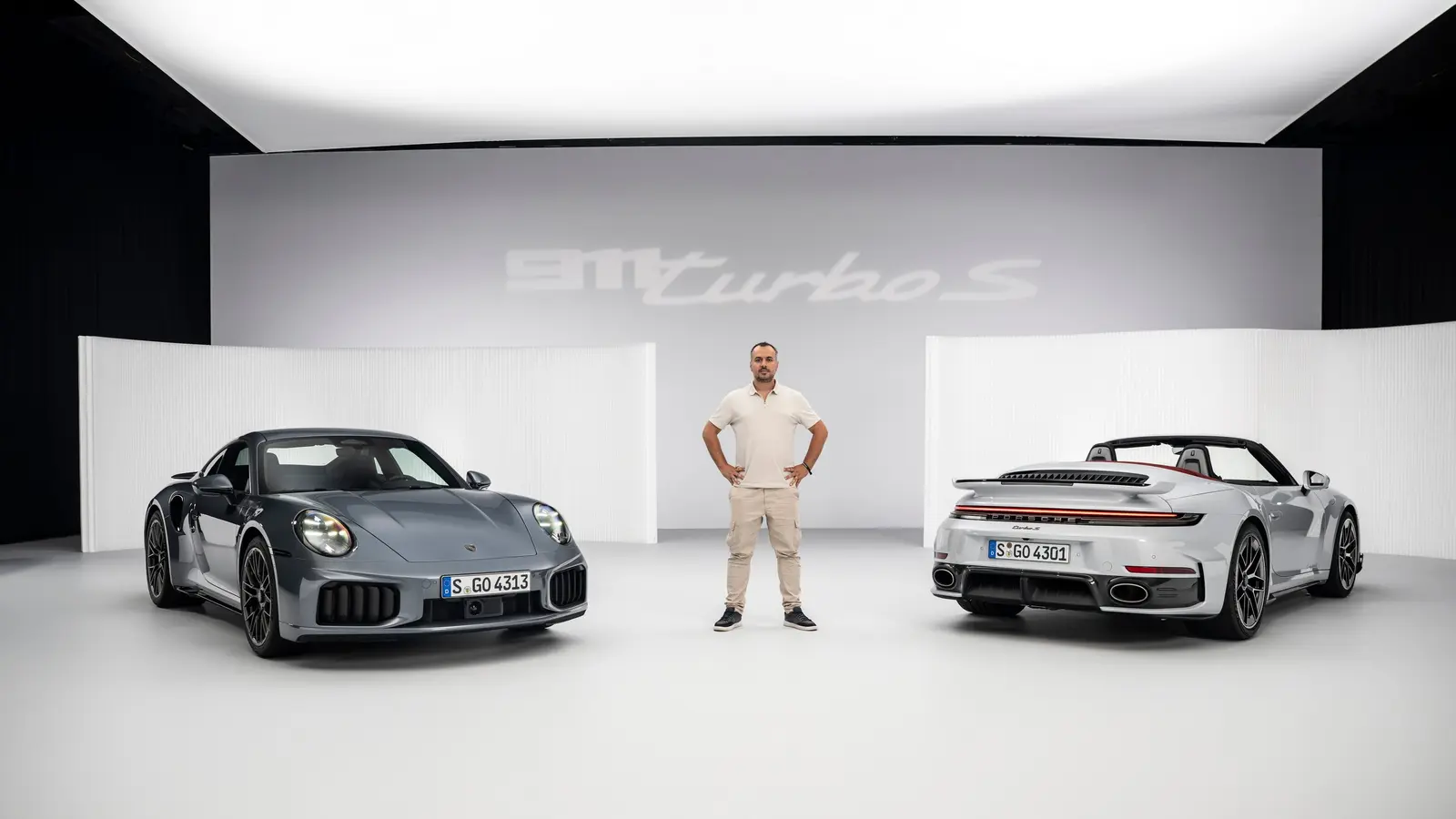
Frank Moser, vice president in charge of the 911 and 718 ranges at Porsche, has made it clear that a plug-in hybrid 911 is not likely to arrive any time soon. Speaking with Australian publication Drive, Moser explained that the Neunelfer’s unique rear-engine layout and tight packaging make adding a large battery, electric motor, generator and charging hardware extremely challenging without compromising core attributes.
Packaging and weight: the hard trade-offs
A plug-in 911 would require a significant rearrangement of the rear-engine architecture to accommodate a high-capacity battery and associated electrification components. That inevitably means more mass and altered mass distribution, which can change handling, steering feel and cornering balance—elements Porsche traditionally treats as sacrosanct for the 911.
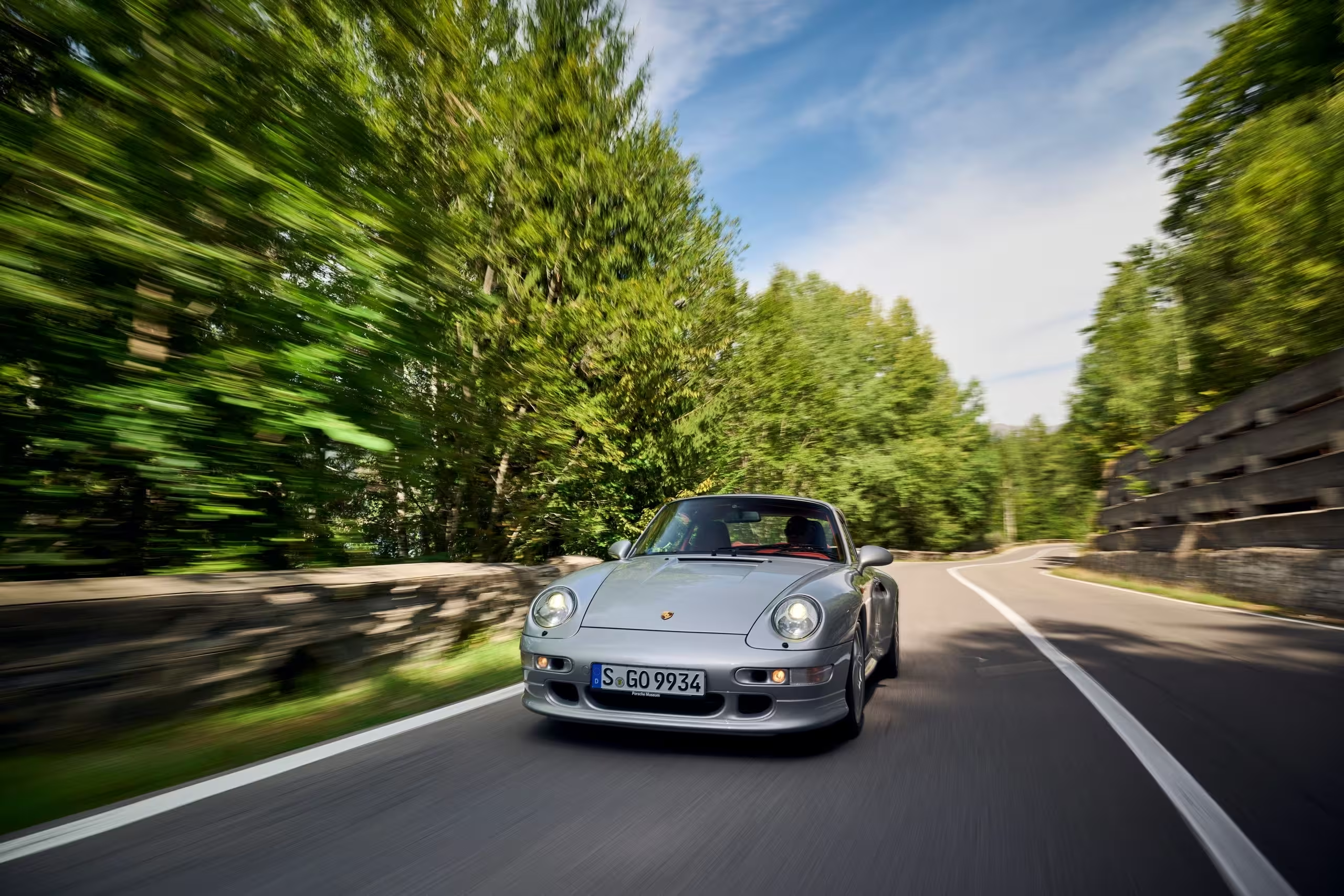
Moser also emphasized that the 911 should not become noticeably larger. Over the decades the model has grown—compare the 996-era Carrera at roughly 4,430 mm long and a 2,350 mm wheelbase to the modern 992.2 Carrera at about 4,542 mm long and a 2,450 mm wheelbase—but Porsche does not want more size simply to house batteries.
Battery tech is the key
Porsche has not dismissed the idea permanently. The company’s threshold for a plug-in 911 is technological: battery cells must become significantly smaller and more energy-dense than today’s lithium-ion packs. In short, next-generation solutions such as solid-state batteries could make a plug-in 911 feasible by shrinking the package and reducing weight penalties.
What the 911 offers today: self-charging hybrid systems
For now, the 992.2 911 lineup uses self-charging hybrid technology that supports performance without a large plug-in battery. Current highlights:
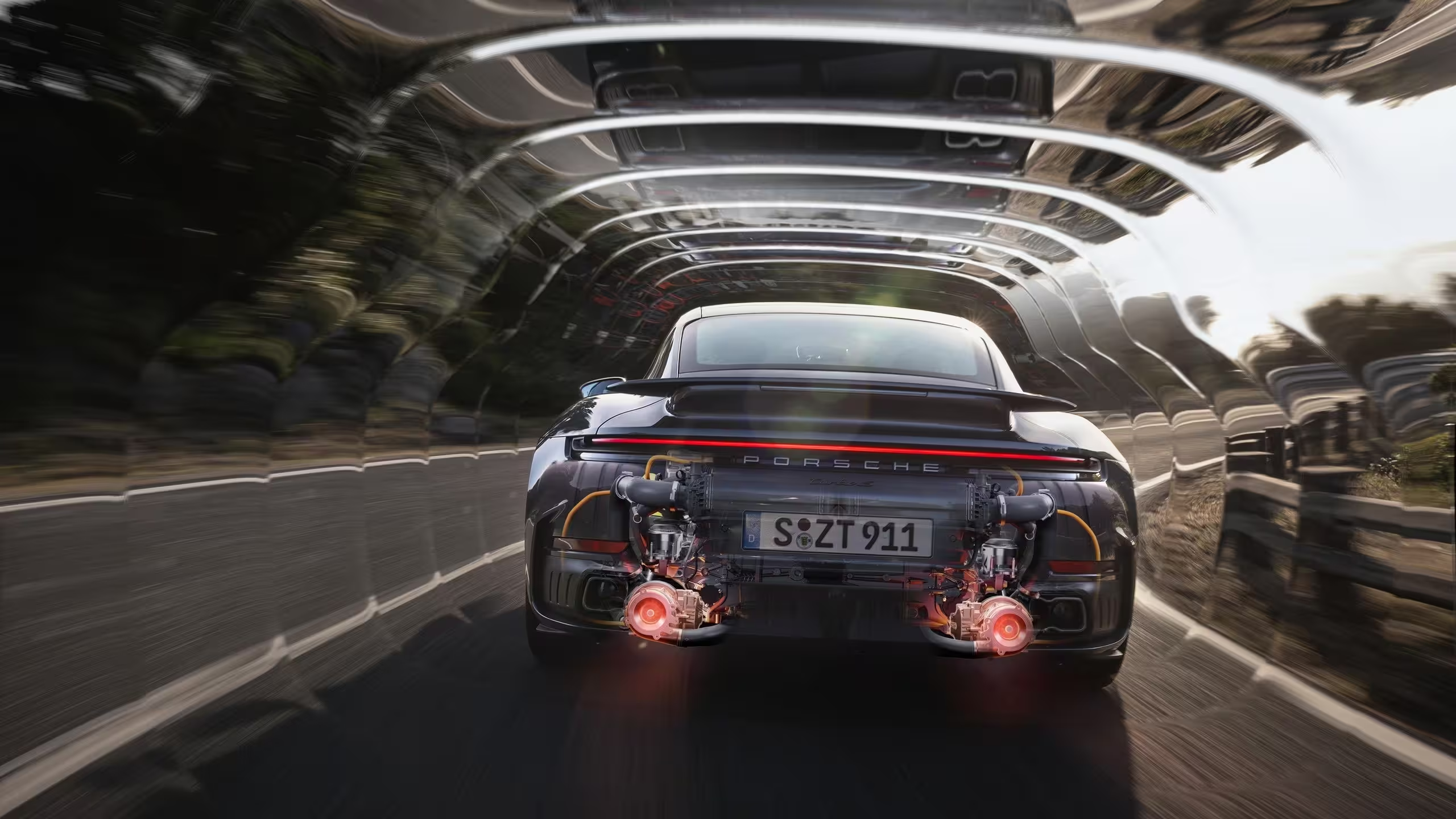
- Porsche T-Hybrid technology with electric turbo assist for quicker boost
- An integrated motor on the turbo shaft that spins the compressor before exhaust gas pressure builds, improving throttle response and acting as a generator to top up the 400-volt system
- A compact 1.9-kWh hybrid battery, similar in size to a conventional 12-volt battery, that feeds an electric motor mounted in the PDK dual-clutch transmission

Porsche rates the PDK-integrated electric motor at up to about 54 horsepower and 150 Nm (111 lb-ft) of torque. The T-Hybrid hardware adds roughly 50 to 85 kilograms compared with pre-facelift models, depending on the specification.
Model and performance context
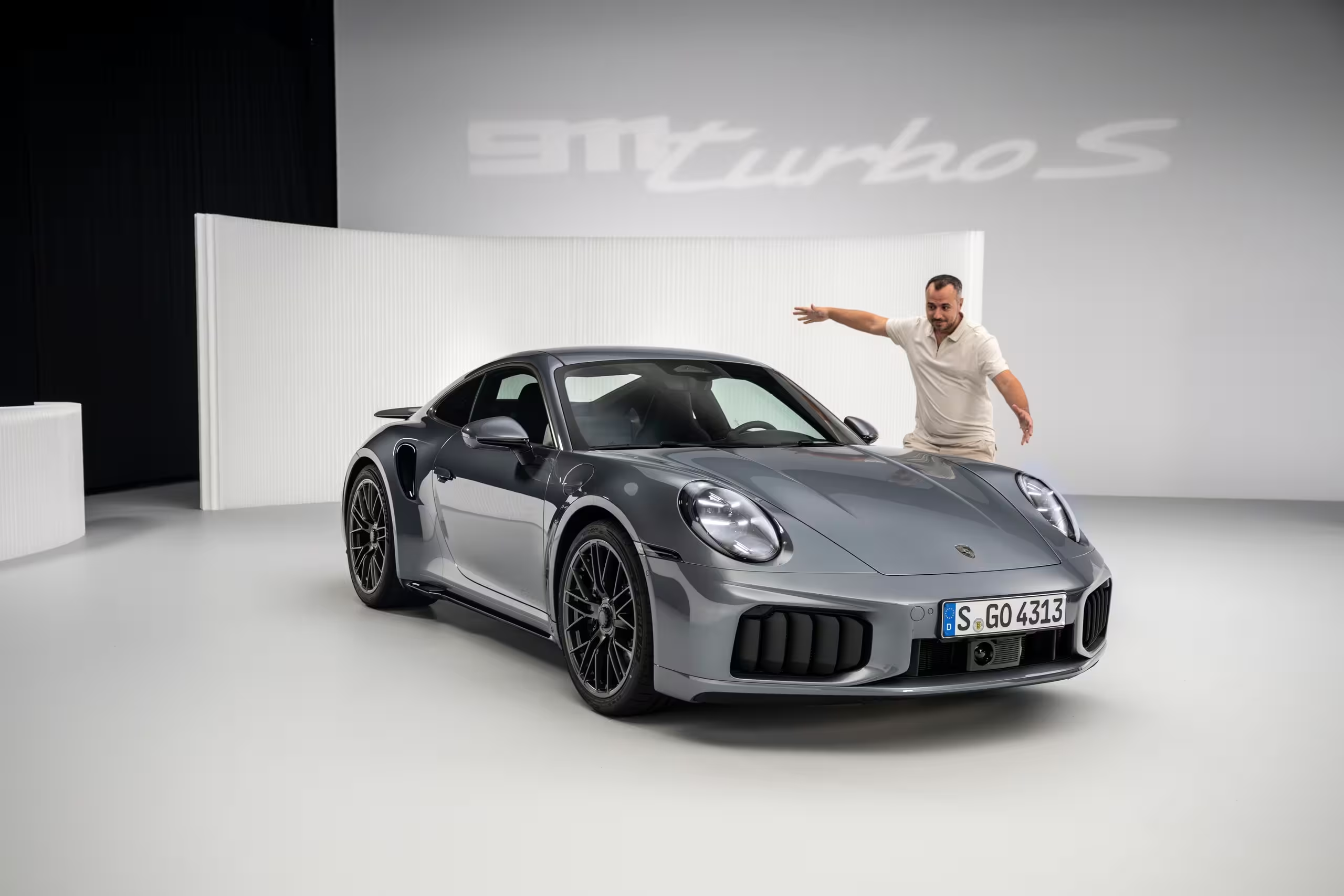
The Carrera GTS and its all-wheel-drive counterpart use single turbochargers combined with this hybrid assistance, while the Turbo S pairs twin turbochargers with electric assistance to preserve the model’s characteristic surge of power. Porsche says the hybrid elements improve responsiveness and efficiency without the substantial weight and packaging compromises that a plug-in battery would bring.
Why a plug-in would be different
Introducing a plug-in hybrid powertrain to a rear-engine sports car is not simply about dropping in parts. Key hurdles include:
- Significant weight increase and its effect on handling
- Major rearrangement of structural and crash architecture to fit cells and charging hardware
- Potential increase in physical dimensions to accommodate packaging
- Cost and complexity for customers who expect purist 911 dynamics
Had Porsche opted to make the Carrera GTS or Turbo S into PHEVs today, the curb-weight changes would be far larger than the tens of kilograms added by the current T-Hybrid systems.
Pricing and positioning
Pricing reflects where Porsche positions the electrified 911s today. For the 2026 model year, a Carrera GTS starts at about $175,900 before taxes and options. The Turbo S—with its more potent twin-turbo setup and electrified assistance—lists at approximately $270,300 for the coupe and $284,300 for the cabriolet. Those prices underline that Porsche is prioritizing performance and refinement while keeping major architecture changes on hold.
Bottom line

A plug-in hybrid 911 is not off the table forever, but it will likely wait for a step change in battery technology. Until cells become markedly smaller and denser, Porsche appears committed to hybrid solutions that preserve the 911’s size, weight balance and sporting character. For enthusiasts who value the car’s driving DNA, that conservative approach will probably be welcome; for those focused on plug-in electrification, the wait may be longer than many expected.
Diskuze
Napsat komentář
Komentáře
Zatím žádné komentáře. Buďte první.